How to Set Up Autopay
A simple guide to setting up automatic bill payments safely — which accounts to use, which bills belong on autopay, and how to avoid overdraft surprises.
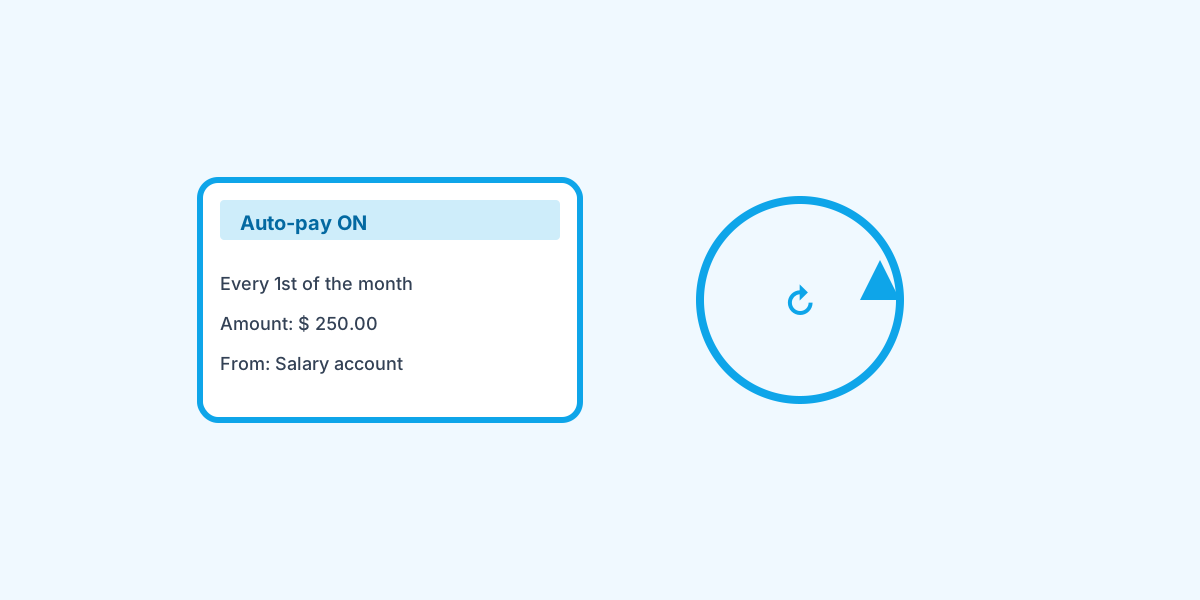
Setting up autopay for recurring bills sounds boring, and it is — which is exactly the point. Once it is on, you stop forgetting credit card payments at midnight, you stop racking up late fees that quietly damage your credit score, and you free up a small amount of weekly attention that adds up over a year. The trick is setting it up in a way that does not surprise you when income or balances change.
Why autopay matters more than it sounds
A single late credit card payment can cost USD 25–40 in fees and add 30–90 days of damage to your credit score. Three late payments across different cards in a year can knock 30+ points off a credit score, which translates into higher interest rates on loans and mortgages for years. The total cost of a forgetful habit can run into thousands of dollars over a decade.
Autopay removes the cognitive load entirely. The bills happen, the money moves, and you only need to notice if something unexpected appears. For most people, that single change saves more money than any budgeting app ever has.
The two account structures that work
The single most common autopay mistake is using your everyday spending account for everything. If your salary lands there too, the timing matches in normal months. But on a slow month — a late paycheck, a big unexpected expense, an annual subscription you forgot about — you can hit non-sufficient-funds (NSF) and rack up overdraft fees on top of the missed payment.
The cleaner setup is one of these two:
Option A: a dedicated bills account
Open a separate current account, funded by a standing order from your salary on payday. Calculate your total monthly recurring expenses (rent, utilities, subscriptions, insurance, loan repayments) and transfer exactly that amount, plus a 10–15% buffer, on payday. All autopays draw from this account and nothing else.
The discretionary spending account stays separate. If you over-spend on a holiday or a new gadget, you cannot accidentally starve the bills account because the money for bills moved on payday, before any discretionary spending happened.
Option B: credit card autopay, paid in full from salary
Set every recurring bill to autopay to a single credit card. Then set the credit card itself to autopay in full each month from your salary account. You get one predictable monthly outflow, plus credit card purchase protection on every payment, plus any rewards points the card earns.
This option requires discipline: if you cannot pay the credit card in full every month, you will pay interest on bills you would not otherwise have paid interest on. The interest rate on most credit cards is 18–25% — vastly more than any rewards points are worth.
What to put on autopay (and what to leave off)
Good autopay candidates are bills with stable, predictable amounts:
- Subscriptions (streaming services, software, gym membership).
- Rent or mortgage payments.
- Broadband, mobile phone, basic utilities (in countries where bills are stable).
- Insurance premiums.
- The minimum payment on any loan (this protects credit score even if you intend to pay more manually).
Variable bills like electricity in summer can autopay too, but watch them. A heatwave can double your bill — autopay will quietly pull the larger amount and surprise you in your account balance.
Two categories worth keeping manual:
- Anything you might dispute — hotel pre-authorisations, hire-car holds, contractor invoices for incomplete work. Once paid, money is hard to get back; refusing payment is the strongest leverage you have.
- Subscriptions you suspect you might cancel soon. Autopay makes cancelling psychologically harder. If you are on the fence about a service, keep it manual until you decide.
Step by step
- List every recurring bill. Pull three months of bank statements and mark every recurring transaction. Most people miss two when they do this from memory.
- Choose the account or card the autopays will draw from. Decide between Option A (dedicated bills account) or Option B (single credit card paid in full).
- For each bill, log into the provider and enable autopay. Look for "automatic payment", "direct debit", "auto-renewal" or "AutoPay" in account settings.
- Set the autopay date 3–5 days after your usual payday. Buffers handle late salary deposits and weekend timing.
- Set a small monthly buffer in the autopay account. 10–15% of monthly bills is enough to cover the rare bill that comes in higher than expected.
- Add a calendar reminder on the first of each month. Two minutes scanning the previous month's bills catches surprises.
Avoiding the autopay surprises
Autopay disasters almost always come from one of three sources:
- A bill that suddenly goes up. Insurance renewal at a higher rate, subscription increase, energy bill surge. The monthly scan catches these.
- An expired card. When cards expire and the new one has a different number, every autopay tied to the old card silently fails. Set a calendar reminder a month before your card expiry to update payment methods.
- An account that quietly went dormant. Banks sometimes restrict dormant accounts after 12+ months of no manual activity. A small manual transaction every quarter prevents this.
The two-minute monthly scan catches all three before they hurt you. If a bill jumps unexpectedly, do not just cover it — open the statement and find out why. The reason might be a permanent price change worth renegotiating.
Country-specific considerations
Autopay implementations vary by country and bank. Some notes:
- UK: Direct Debit is governed by the Direct Debit Guarantee, which means you can reverse any charge through your bank with no questions asked. This makes UK autopay particularly safe.
- US: Autopay is mostly via ACH or credit card. ACH is harder to reverse than UK Direct Debit but is generally protected by consumer law (Regulation E).
- EU: SEPA Direct Debit covers most euro-denominated bills and has a 56-day no-questions reversal window.
- India and South Asia: UPI AutoPay and bank-level "ECS mandate" both work for recurring bills, with slightly different revocation processes.
The boring win
A well-built autopay system is almost invisible. No reminders, no late fees, no panic. The hour you spent setting it up keeps paying for itself for years — typically saving USD 200–400 per year in fees and avoided interest, plus several hours of monthly attention that goes to something more useful.
Most personal-finance advice over-complicates things. Autopay is one of the rare moves that genuinely is easy, free, and pays off immediately. The only people who should not do it are those who consistently cannot maintain enough buffer to handle an unexpected charge.
If you do not have a buffer to support autopay
For people living paycheck to paycheck, autopay can be dangerous — a single unexpected expense can cascade into overdraft fees. The right answer is to build a small emergency buffer first (even USD 200–500 helps) before automating bills. The Savings Calculator on this site can help work out how long it takes to build a buffer of a given size from a given monthly contribution.
What to automate next
Once autopay is humming, the same principle extends to savings and investments. Set up an automatic transfer to a savings account or investment platform on payday. Whatever stays in checking is what you can spend. This single habit is the most reliable wealth-building strategy ever invented.
Common ratios to aim for: 50% of after-tax income for needs (rent, food, transport), 30% for wants, 20% for savings and debt repayment. The exact split is personal — but automating the savings portion makes the whole framework actually work.
Sources and further reading
- UK Direct Debit Scheme — Direct Debit Guarantee (directdebit.co.uk)
- US Consumer Financial Protection Bureau — Automatic payments (consumerfinance.gov)
- SEPA Direct Debit consumer guide (European Payments Council)
- Money Saving Expert — Direct Debit and standing order guides
Note: This article is general financial guidance, not personalised advice. Specific autopay implementations vary by bank and country. Always read the terms attached to any direct-debit or autopay arrangement before authorising it.